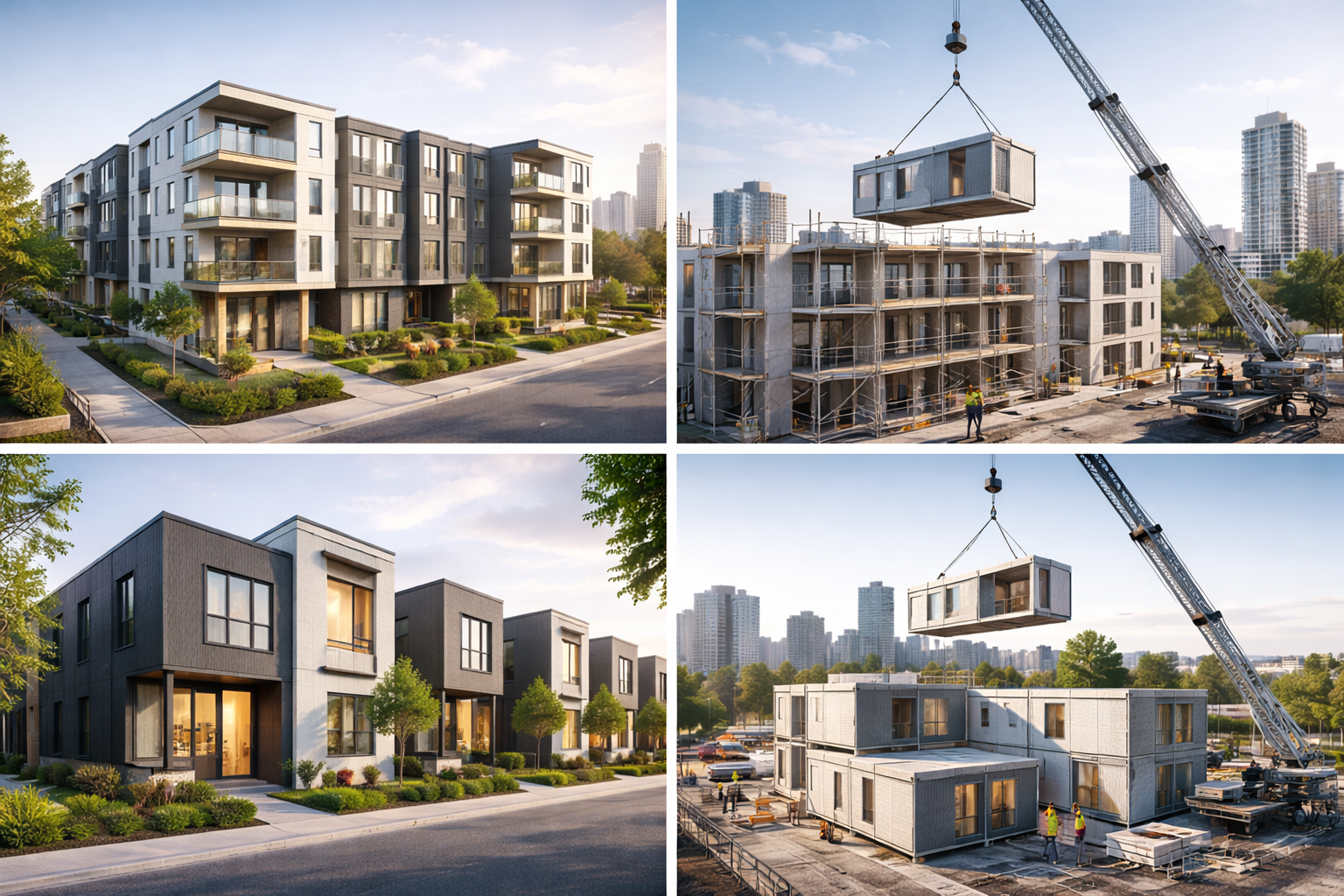
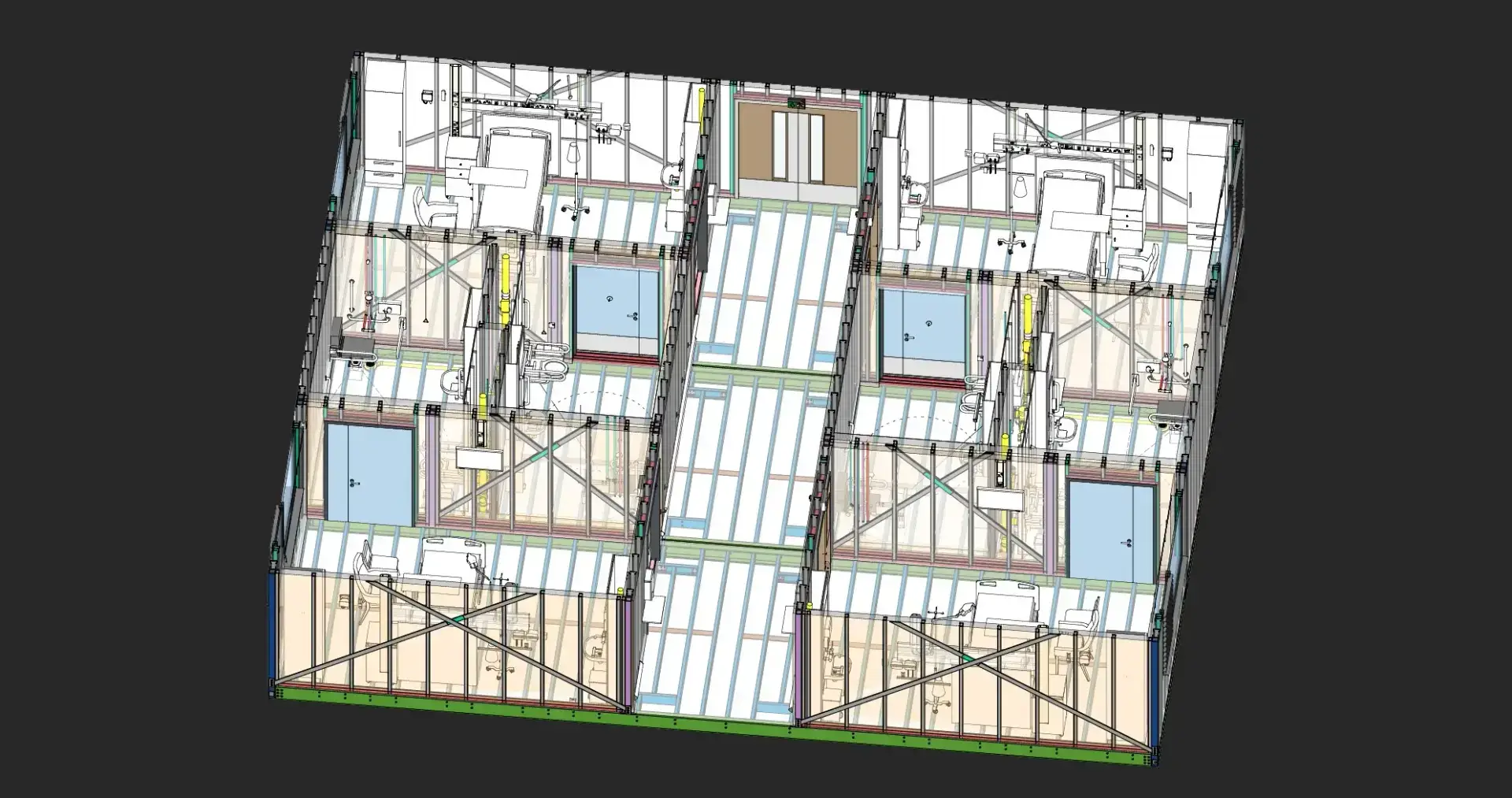
Traditional construction often suffers from schedule drift, cost volatility, labour shortages, and uneven quality. Modular housing delivery improves certainty by moving major work into controlled manufacturing environments.
This same delivery model also supports vertical extensions, where adding floors to existing buildings requires tight logistics and low-disruption installation.
We combine integrated design, manufacturing planning, logistics, and installation sequencing so delivery is faster, cleaner, and more predictable.
Modular delivery supports faster occupancy without sacrificing design quality.
With up to 90% of construction completed off-site, modular overbuilds drastically reduce on-site activity, noise, and disruption. This makes it ideal for occupied buildings, such as offices, hospitals, and residential complexes, where business continuity and safety are critical.

Using advanced manufacturing techniques, modular units are built to exact specifications, ensuring high-quality standards and compliance. Off-site precision engineering eliminates common on-site construction errors and ensures that modules seamlessly integrate with existing structures.
Modular construction utilizes lightweight, high-strength materials, reducing structural loads and minimizing the need for costly foundation reinforcement. This makes it possible to add new floors to older buildings that may not have been originally designed for vertical expansion.
Traditional construction projects often face budget overruns and unpredictable delays due to weather, material shortages, and labor challenges. Modular construction provides a fixed-cost solution with faster, more predictable delivery timelines, reducing financial and operational risks.
Every modular overbuild is meticulously planned using Digital Twin technology, creating a virtual replica of the existing building and proposed extension. This allows for accurate coordination, clash detection, and real-time adjustments, ensuring a perfect fit and optimized structural compatibility before installation begins.
By manufacturing in a controlled production environment, modular construction minimizes material waste and optimizes resource use. Additionally, modules can be designed for energy efficiency, incorporating sustainable materials and smart building systems to reduce long-term operational costs.